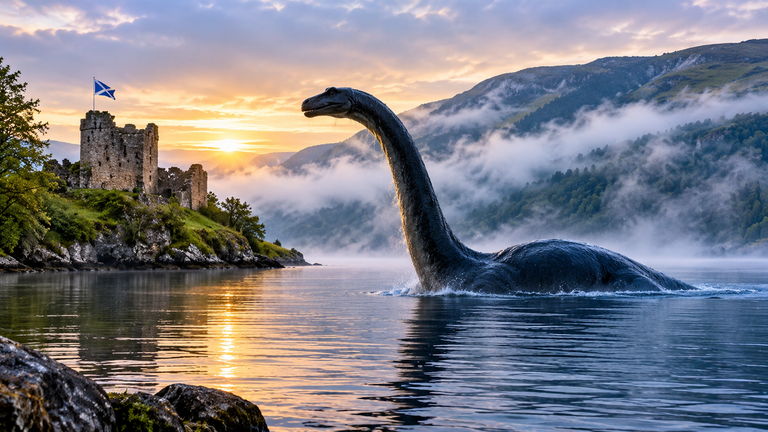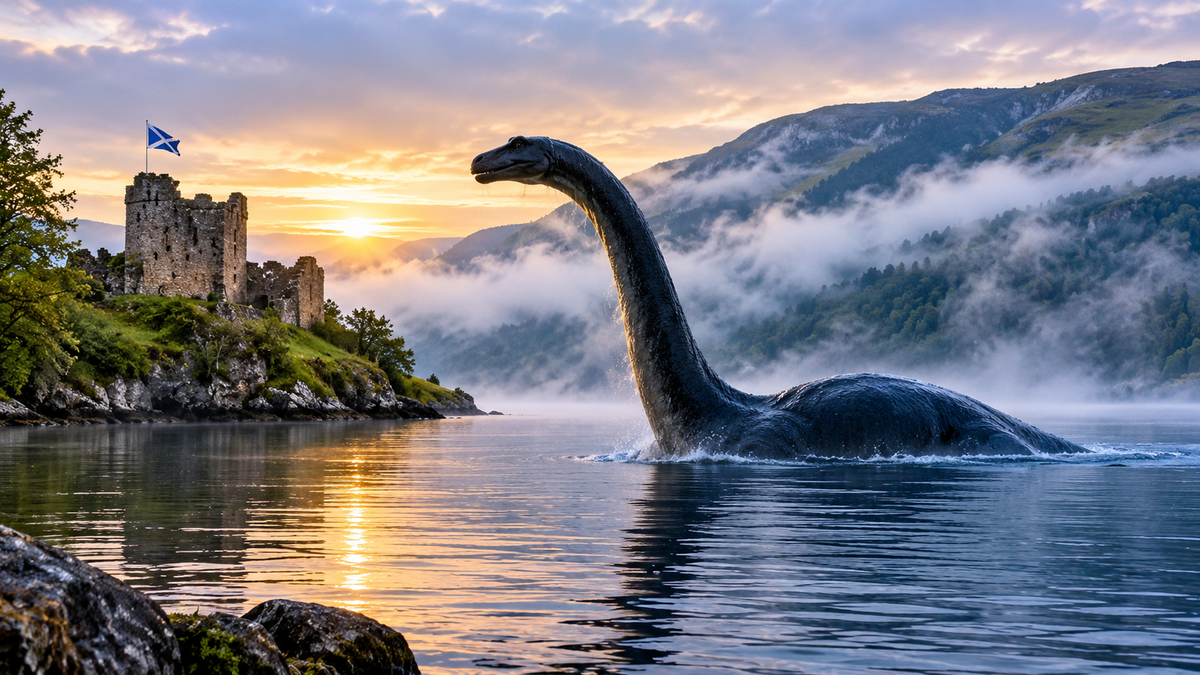

For generations, people have searched the dark waters of Scotland’s Loch Ness for a creature that may or may not exist. Now, a new rise in reported sightings has brought the world’s attention back to the legendary monster known as Nessie.
A Mystery That Refuses to Disappear
Deep in the Scottish Highlands lies Loch Ness, a vast freshwater lake surrounded by mountains, forests and historic landscapes.
For decades, this lake has been connected to one of the world’s most famous mysteries: the Loch Ness Monster.
Known popularly as Nessie, the creature is often described by witnesses as a large animal with a long neck, a dark body or unusual shapes moving beneath the water.
Now, the mystery has returned to the headlines.
According to the Official Loch Ness Monster Sightings Register, 15 sightings have been accepted in 2026, compared with six during the whole of 2025.
The increase has attracted renewed attention from mystery enthusiasts, tourists and researchers.
But does a higher number of reports mean that something unknown is actually living beneath the lake?
Three Recent Encounters That Raised Questions
Some of the reports recorded during 2026 describe unusual shapes appearing in the water.
A mysterious shape in March
An American visitor reported seeing a dark greenish-grey body emerge from the water. According to the account, the shape remained visible for around five seconds before disappearing beneath the surface.
A strange sighting in July
A local sailor reported seeing what appeared to be an oversized crocodile-like head above the water while travelling on his yacht.
The shape disappeared before he could photograph it.
A possible giant eel in August
A visitor from Malta described seeing something resembling a very large eel moving against the current. The witness estimated its length at approximately seven metres.
These accounts have added new stories to the long history of the Loch Ness mystery.
However, they remain eyewitness reports rather than scientifically verified evidence of an unknown creature.
Why Are Scientists Still Interested in Nessie?
The increase in sightings has attracted attention from researchers who study unusual eyewitness experiences.
One of them is Charles Paxton, a research fellow in statistical ecology at the University of St Andrews in Scotland.
Speaking to Fox News Digital, Paxton explained that reported sightings can change significantly from one year to another.
He does not believe the increase proves that a previously unknown animal lives in the lake.
Instead, his research examines the patterns behind sightings and asks why people sometimes interpret ordinary events as something extraordinary.
He has also suggested that people reporting unusual experiences do not necessarily have to be lying.
There may be genuine observations behind their stories, even if the explanation is different from what witnesses initially believe.
What Could People Be Seeing Beneath the Water?
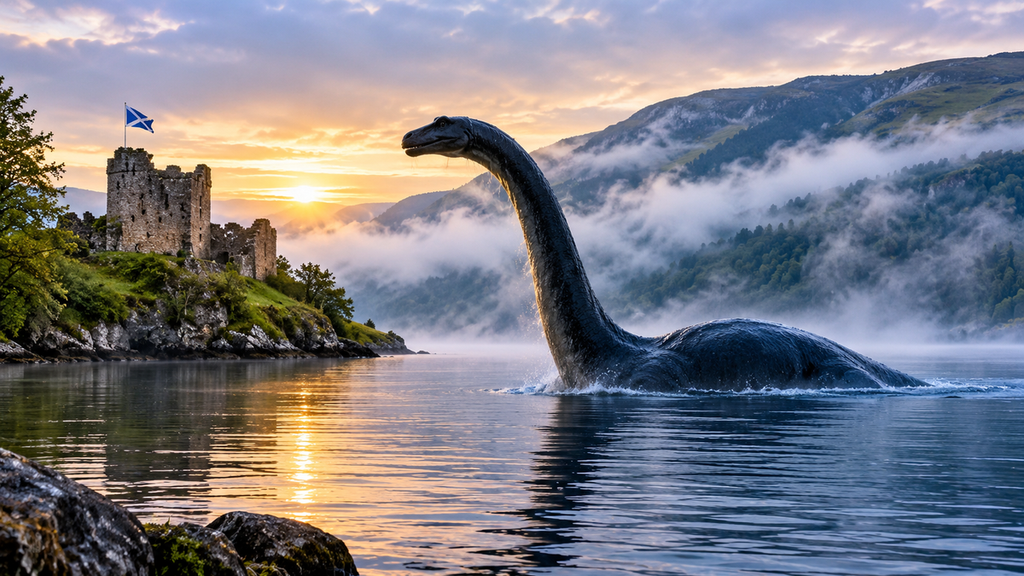
There are several possible explanations for the mysterious sightings.
1. Large eels
Loch Ness contains eel populations, and some researchers have considered whether unusually large eels could explain certain reports.
However, there is no confirmed evidence that giant eels account for the sightings.
2. Waves and boat movements
The movement of boats can create wakes that travel across the water. From a distance, these waves may look like large moving objects.
3. Floating vegetation and natural objects
Floating plants, logs and other objects can create unusual shapes, particularly when viewed through changing light and mist.
4. Animals moving through the lake
Ordinary wildlife can sometimes appear unfamiliar when seen briefly or from far away.
These explanations do not solve every reported encounter, but they show why a photograph or eyewitness description alone cannot establish the existence of Nessie.
The Scientific Search for Answers
Scientists have also investigated Loch Ness using environmental DNA, commonly known as eDNA.
This method examines genetic material left behind by organisms in water, including tiny traces from skin, scales and other biological material.
A major 2019 study led by researchers at the University of Otago collected and examined water samples from the lake.
The research did not find evidence supporting the presence of a giant prehistoric reptile such as a plesiosaur.
However, eel DNA was detected throughout the lake.
This finding does not prove that a giant eel exists, but it provides another possible direction for investigating some reports.
The research demonstrates how modern science can investigate an old mystery without relying only on photographs and eyewitness stories.
Why the Loch Ness Mystery Still Attracts the World
The story of Nessie has continued for generations because it combines three powerful elements: an unusual location, unexplained sightings and the possibility of discovering something unknown.
The modern wave of interest began in the 1930s, when reports and photographs attracted international attention.
Since then, tourists, photographers, researchers and monster hunters have visited the Scottish Highlands hoping to find convincing evidence.
Even today, the lake remains a popular destination for people fascinated by its legendary creature.
The latest increase in reported sightings has given the mystery another moment in the spotlight.
But public interest should not be confused with scientific proof.
Is Nessie Real? The Mystery Continues
Fifteen reported sightings in 2026 have brought fresh attention to Loch Ness, but the central question remains unanswered.
No reliable scientific evidence has established that a large unknown monster lives in the lake.
At the same time, the stories continue to encourage questions about what witnesses actually see beneath its dark waters.
Perhaps the answer lies in ordinary animals, unusual waves or optical illusions.
Or perhaps future research will reveal something about the lake that scientists have not yet discovered.
For now, Nessie remains one of the world’s most famous mysteries.
What do you think? Are people seeing an unknown creature in Loch Ness, or could natural phenomena explain the strange sightings? Share your opinion in the comments.
Editorial note: Sightings discussed in this article are reported eyewitness accounts. They have not been independently verified as evidence of a previously unknown animal.
About the Author